Beyond the pages of Unwoven
Explore the people places and original documents behind
Tom Burbury’s story
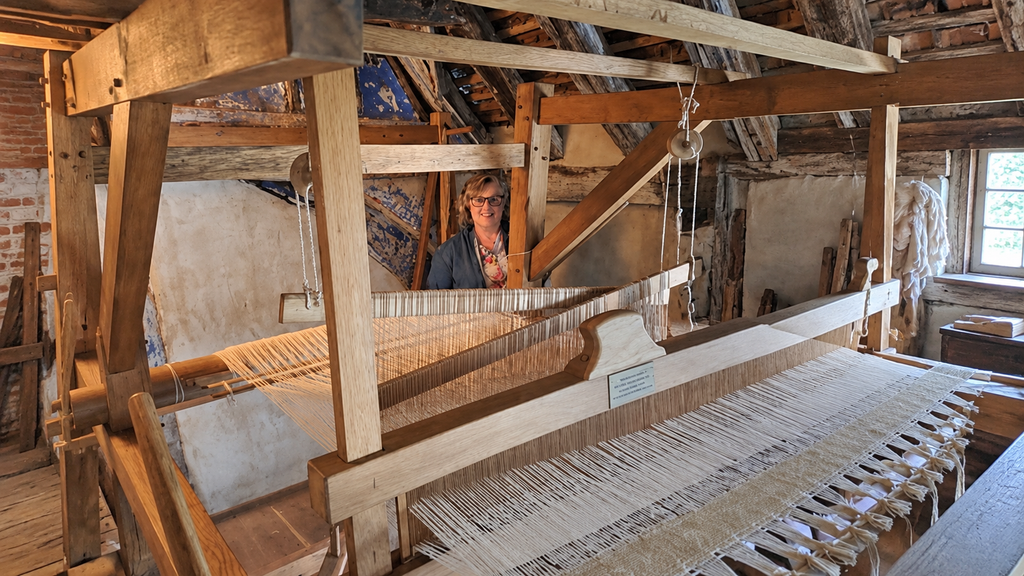
Single hand loom at The Weaver’s House, Coventry, UK
Thanks for reading Unwoven! Click on the links below to discover a treasure trove of additional historical information.
Enjoyed the book?
Help other readers discover this forgotten story
sadfasdf
Explore the bonus material below — the people, places and original records behind the novel.
Table of Contents
Maps and Buildings

In recent times, the original location of Beck’s Mill was a mystery. That was until super sleuth local conservationist and historian, George Demidowicz uncovered it by searching old Board of Health Maps from 1851.
Beck’s Mill was rebuilt and later owned by Thornley’s brewing. This picture dates back to 1937 just before the poor old girl was demolished for good. I used this picture as a model for the building on the cover of Unwoven.
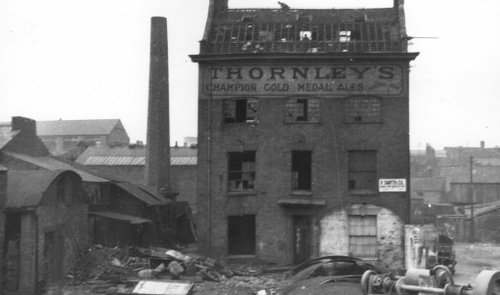
Sometime during 1832/33 Josiah Beck was paid £2340 compensation by the City of Coventry to rebuild his factory, as recorded in the annual City accounts and reported in the Coventry Herald and Observer
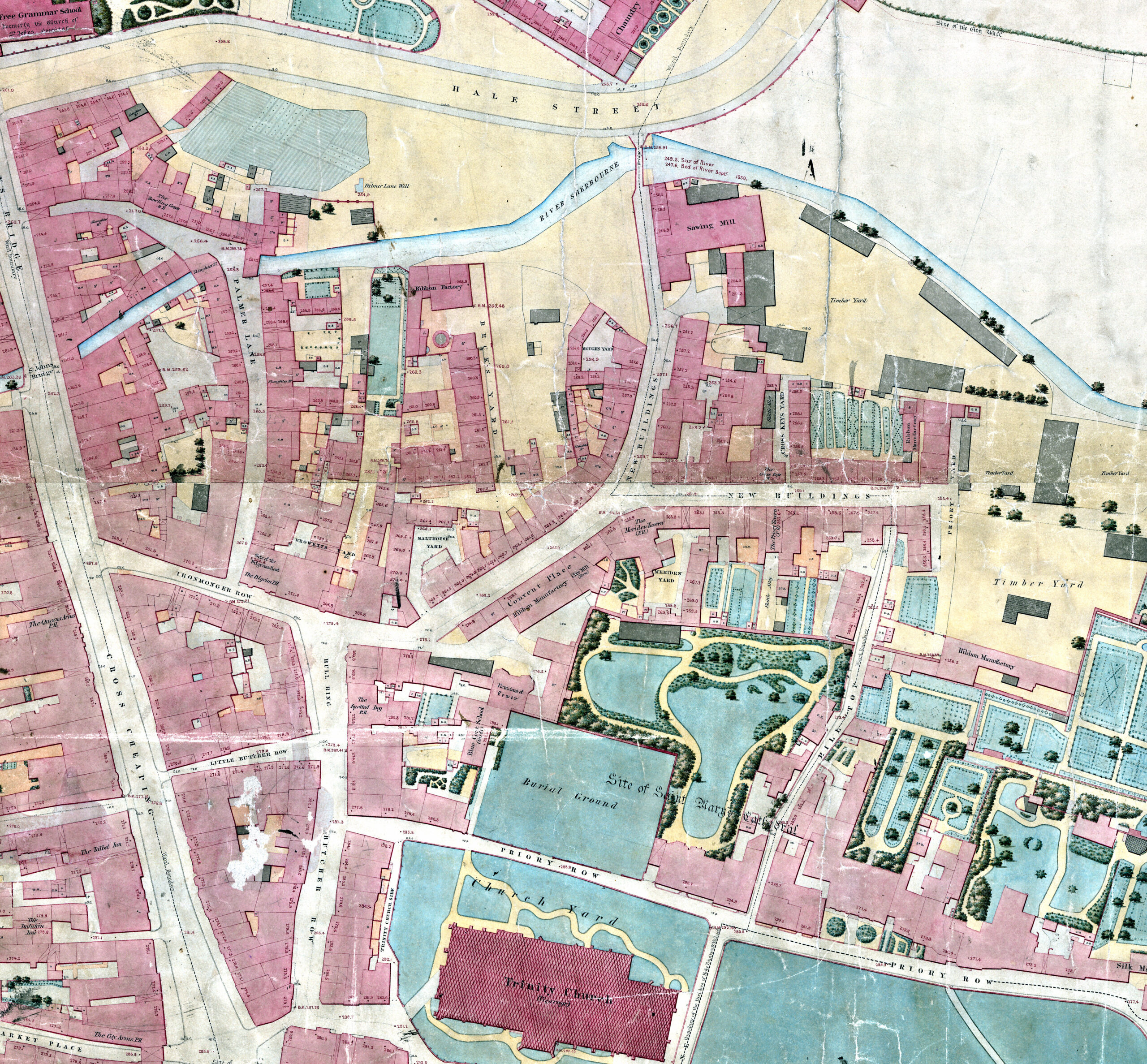
This is the 1851 Board of Health Map that uncovered the mystery of where Beck’s Mill had been located.
Beck’s Yard extends from the street called “New Buildings” on the southern side of the River Sherbourne. At the end of Beck’s Yard you will see a building marked “Ribbon Factory”. This is the site of Beck’s Mill.
Imagine the triangular section near the bridge to the right of Beck’s Mill is a pool of water. The bridge would be part of the dam wall back in 1831. There stood Thomas, his brother John, timber worker, Dick Thompson, little Billy Bassett and a huge crowd, all gathered to watch the inferno.
These days the river runs under the city, the streetscape is totally different and there’s a Sainsburys on the site.
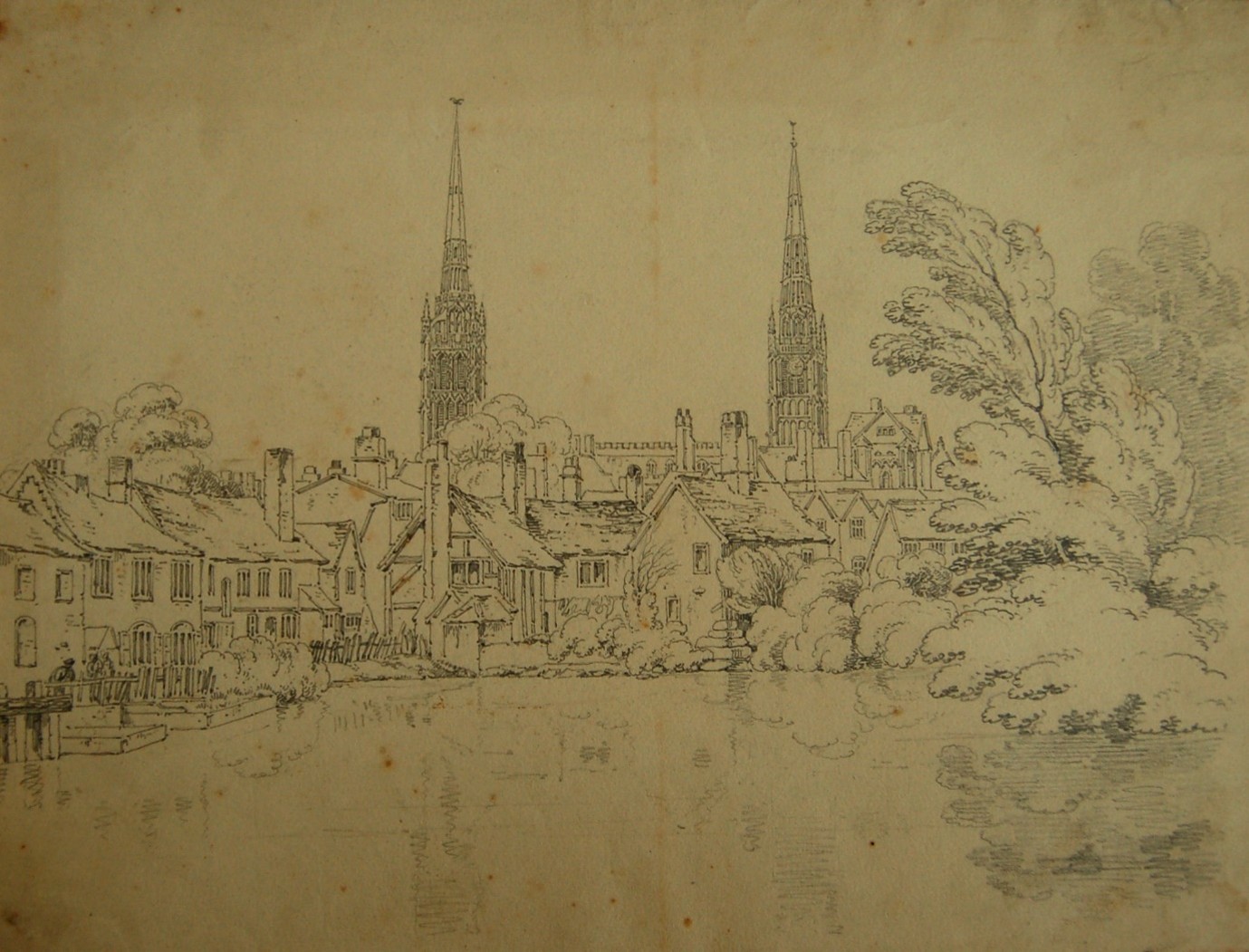
The next image is the Mill Dam (also known as the Priory Pool). Scenic, picturesque, serene. But on the day of the riot, the path to the left would have been packed with people horrified by the flames and the sounds of the inferno just across the pool at Beck’s factory (just out of sight on the right behind the trees on the far side of the River Sherbourne). The view is looking south.
As an armaments manufacturing city, Coventry was bombed mercilessly in World War 2 including the glorious St Michael’s Cathedral directly across the road from the gaol. After the war Coventry became the UK’s ‘motor city’ and the second biggest car manufacturer in the world. Clearing ancient streets and laneways to make way for fast-moving ring roads became fashionable.
As a result this whole area is completely different now with the Sherbourne and the pool underground. The streets have changed too so it’s extremely difficult to identify where Beck’s building had been.
Historical figures
There were no cameras in 1831 and the daguerrotype didn’t become commercially viable until 1839 so all we have are portraits. Of course, there are no portraits of our working class Burburys or Ben Sparks or even the Reverend Peggs, just the aristocrats, parliamentarians, the judge and royalty.


(c) Royal Academy of Arts / Photographer: John Hammond /
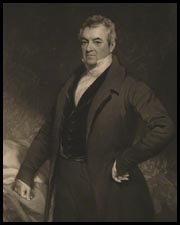
(c) National Portrait Gallery, London, by and published by William Walker, after Thomas Phillips, mezzotint, published 5 July 1847
Documents from the archives
The documents below are some of the original letters, reports and depositions that helped bring Tom Burbury’s story to life. Click on any document to explore the original, read a transcript where available, and discover the story behind the record.
Documents in this archive
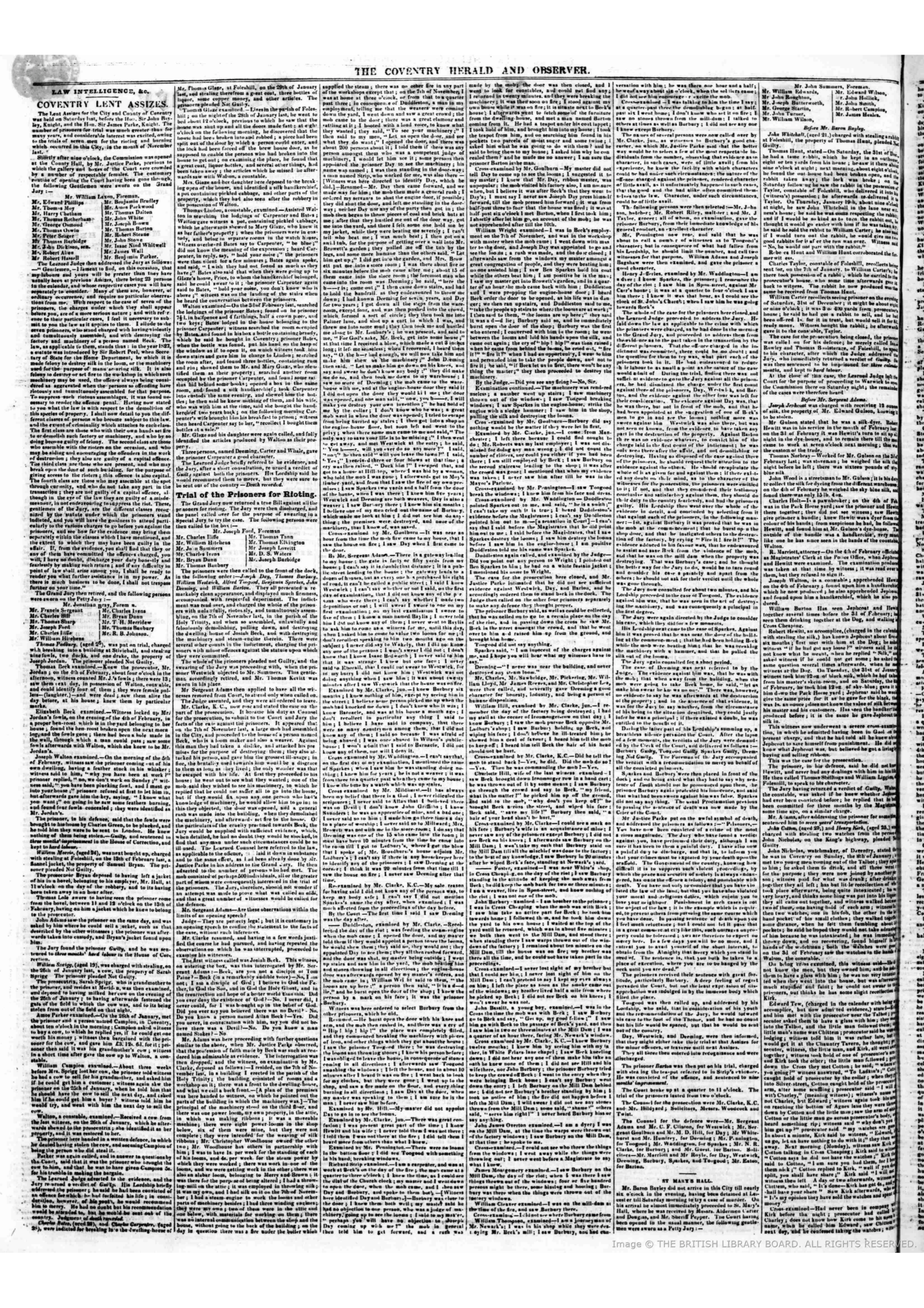
01 – Coventry Herald and Observer – 30 Mar 1832 Trial of Prisoners for Rioting
Another interesting letter included this comment about Thomas: “He was in the house a few minutes but certainly and most assuredly broke open no door and gave no order for firing the premises. How this mistake has been made I know not, but judging of the man’s character and all we can have learnt, He is not Devil enough for the crimes with which he is charged.” I incorporated this into Bunt’s (Lawyer Parke’s) letter to MP Ellice. At one point, the working title of the novel was Not Devil Enough.
Similar assessments of Thomas’s good character appear elsewhere. For instance the Coventry Herald and Observer’s report on the trial. After the judge put on his black cap of death and pronounced the dreaded sentence the article states: “The prisoners received their sentence with great fortitude, particularly Burbury” (click on the image and zoom in. In the 5th column, count six paragraphs above the heading ‘St Mary’s Hall’ near the bottom of the column). The article itself begins in the second column. You will also see a good deal of the judge’s and witness comments which are replicated in the novel.
02 – Justice Parke letter to Lord Melbourne attaching trial record
A barrage of letters and numerous petitions* were sent to the King and the Home Office pleading for mercy for both Burbury and Sparkes. Peggs also wrote to Justice Parke who promptly penned a letter to Lord Melbourne to explain why he felt the verdict and sentence should stand. In doing so, he attached a copy of the trial notes, handwritten by a court clerk!
I was so excited to read this document as it filled in so much detail that was missing from the newspaper report. Also, it had a map! As it happens, the map is incorrect but it gave me a thrill to think of the court clerk carefully drawing the streets and the mill dam to assist Justice Parke with his deliberations.
The frustrating part of this court record (as with the newspaper reporting) is nothing of what the lawyers say is recorded—none of the questions put to the witnesses, no cross examination nor any opening or closing arguments. Often it is only the insertion of a question that makes sense of the disjointed witness responses. See if your reconstruction of the questioning matches my efforts in the novel.
* Petitions included one signed by all of the master weavers, another by all of the local clergy and of course the petition signed by the jury. There were many others with thousands of signatures.
03 – Letter from William Burbury to Lord Fitzroy Somerset
I found the letter from Tom’s father, William Burbury, to his former officer, Lord Fitzroy Somerset deeply moving. Precious for being the voice of Tom’s family, describing the heartache they all felt. It appears in UNWOVEN exactly as it is in real life reaching out to us through the years. And we get a sense of William as well himself.: his writing is functional, but his grammar is unrefined (‘in which you was Cornet’) and his language lacks the polish of the educated classes. I treasure this letter. It’s truly a rare thing — otherwise invisible to history, it is the anguished cry of a working man trying to save his son.
See how you go at cracking the Copperplate code – you can compare against the version in the novel!
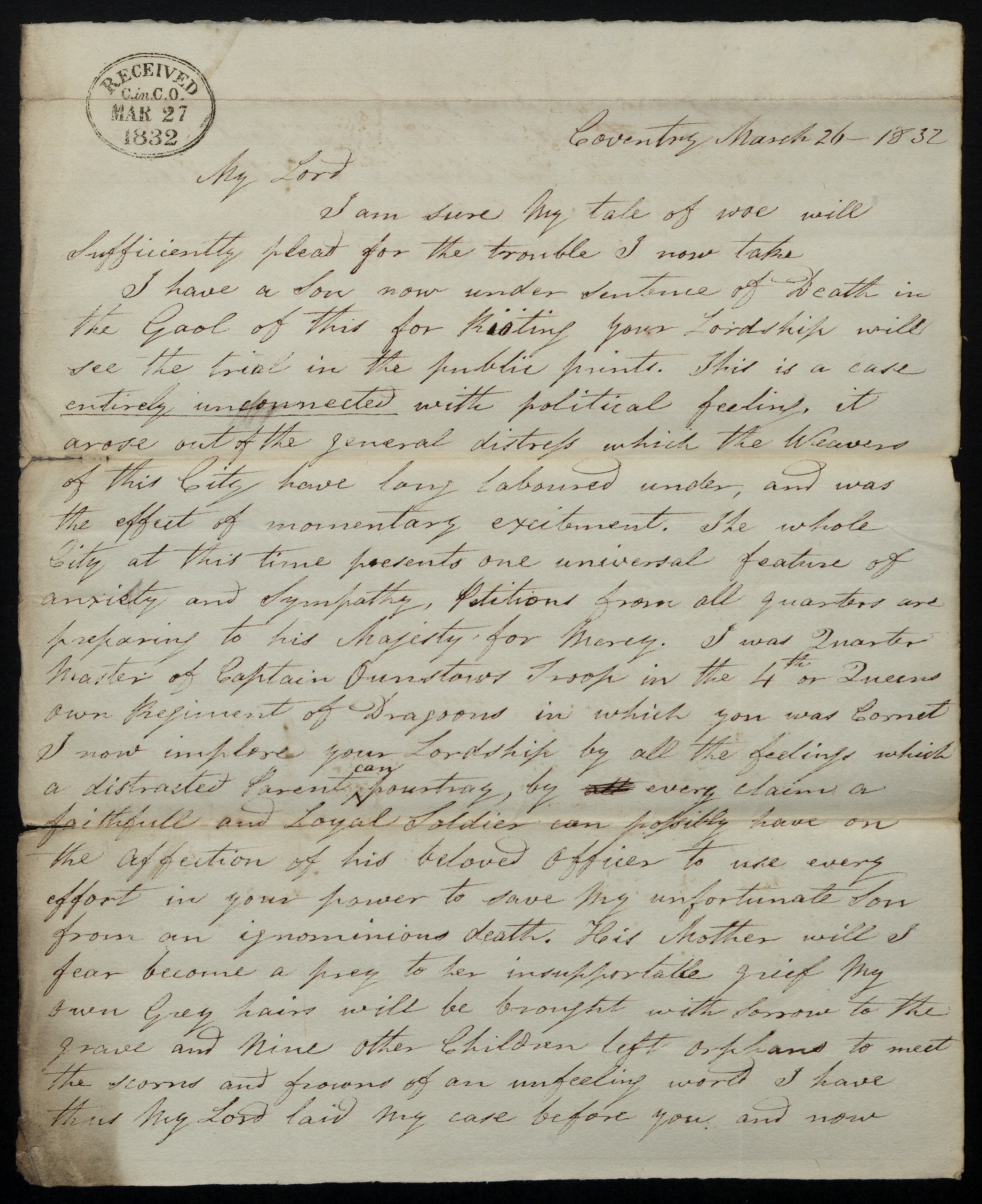
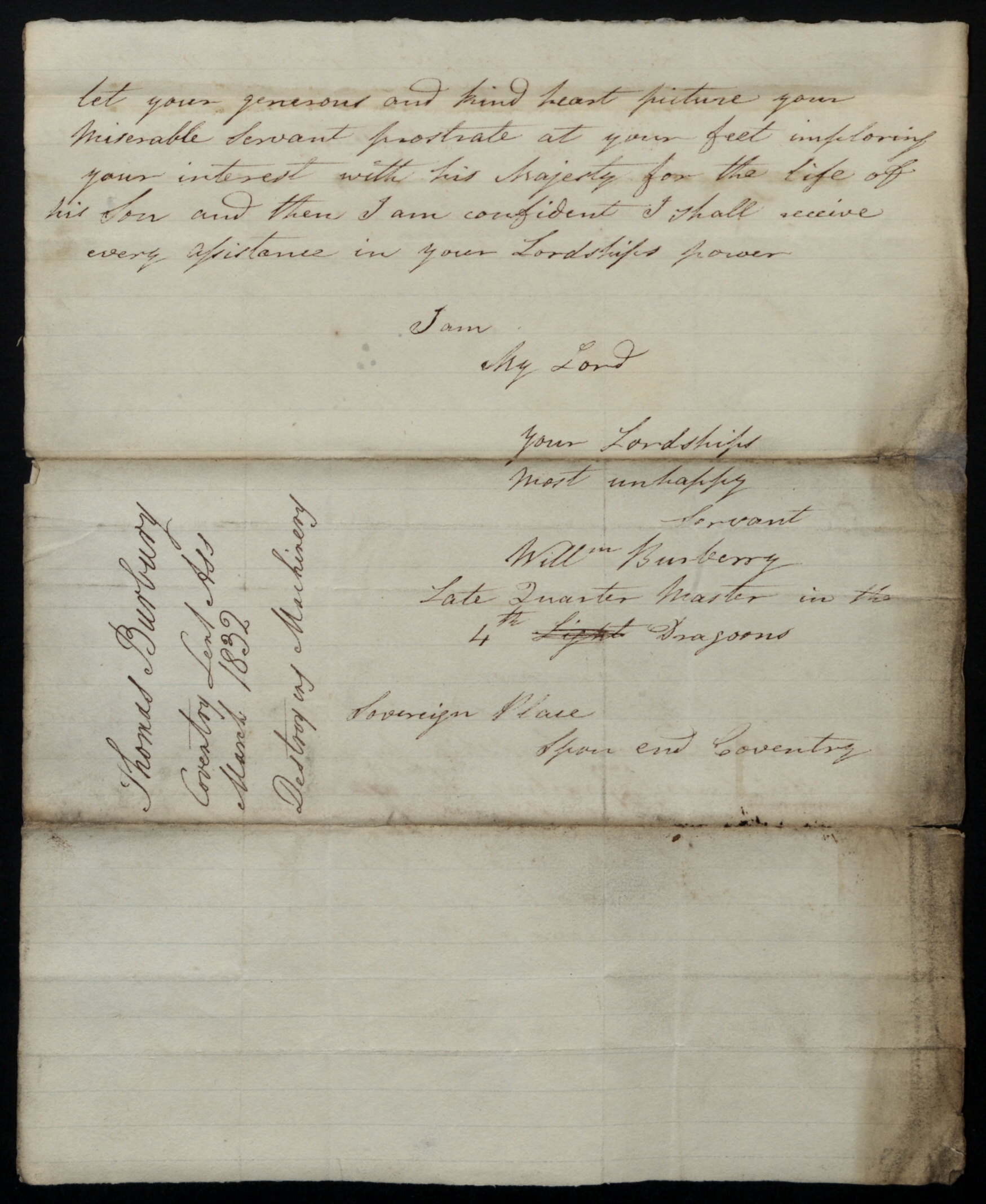
Military Service of QMS William Burbury
William Burbury’s letter also reveals much of his military career:
he was a Quartermaster Sergeant (QMS) in the 4th (Queen’s Own) Dragoons when Lord Fitzroy Somerset was a Cornet (lowest ranking cavalry officer) in the regiment, placing William’s service in this rank in 1804/05.
if William joined the army at around eighteen, in about 1796, he would already have had several years’ experience by this time. His rise to QMS would have been relatively rapid, suggesting a capable and ambitious young soldier, although we cannot know whether this was his actual path.
Quartermaster Sergeant is a non-commissioned officer rank. Had William risen to Captain (as previous family histories have maintained) there would have been numerous records documenting the steps to Cornet, Lieutenant, then Captain. The paper trail would flow through various official military registers and service records and in the London Gazette. Basic searches have not returned any evidence of such promotions. Note: rising above the NCO ranks was rare usually preceded by a particular act of bravery. The evidence suggests William did not see combat.
The name of the regiment had changed over time. At the time William joined it was a heavy cavalry unit. It remained so during the time Somerset was Cornet. But from 1818 it switched to light cavalry and the word ‘Light’ was added to the regimental title. William may have agonised over which terminology to use — he needed Lord Somerset to read it, not to discard it for being inaccurate or clumsy. In the end he decides on the regimental name as it was when he served with Somerset.
Did William Burbury fight Napoleon on the Continent?
When Wellington’s army sailed to fight Napoleon in the Peninsular War, did Quartermaster Sergeant William Burbury go with them? I have cross-referenced British Army deployment records with his children’s births to reconstruct his final years in the service.
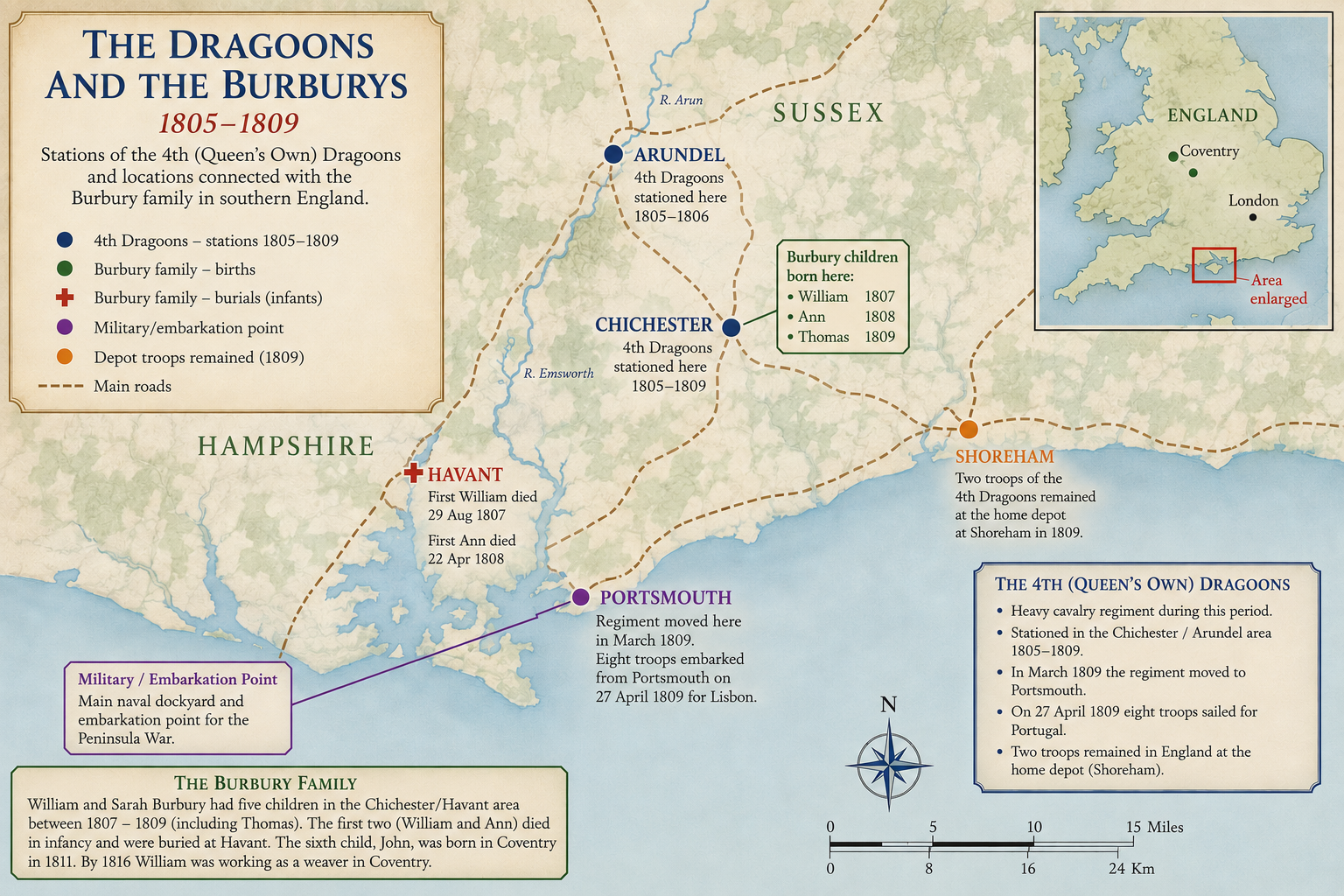
Between 1807 and 1809, the births and tragic infant deaths of two Burbury children closely track the 4th Dragoons’ wintering and staging locations across Sussex and Hampshire.
Early 1809: Thomas is born in Chichester as the regiment receives its final orders.
April 1809: The 4th Dragoons embark from Portsmouth for Lisbon. William’s administrative role as Quartermaster Sergeant would have made him invaluable in England, managing the regiment’s Home Depot at Shoreham and later Canterbury, training recruits and supplying troops overseas. Alternatively, did he travel with the regiment to wrangle supplies and logistics on the front lines?
By 1811, the family had moved hundreds of miles north to Warwickshire’s industrial heartland, leaving the southern military garrisons behind.
1811: John is baptised in Coventry.
1814: daughter Maria is baptised in Bethnal Green, London. Suggests the Burburys were living in London for some reason at this time. Family tradition has William serving as a Beefeater (Yeoman of the Guards) at the Tower of London. It’s possible but needs verification.
1816 and 1820: Elizabeth and William are baptised in Coventry. Crucially, the parish registers identify William’s civilian trade as a weaver and ribbon weaver.
When the regiment returned from the Continent, it was posted to Ireland from 1815 – 1819. However, Sarah gave birth to Elizabeth in 1816 (baptised in Coventry), with William recorded in the registry under occupation as ‘weaver’.
Family tradition suggests William may have fought at Quatre Bras and / or Waterloo but his regiment was in Ireland at this time. And he and Sarah were welcoming more children into the world in Coventry at this time.
Burbury Family Map
What can we say with any certainty?
William did not fight in the Peninsular War. Biology and military logistics provide the proof. John was conceived in mid-to-late 1810. During this exact window, the 4th Dragoons were locked down deep in Portugal, retreating to the Lines of Torres Vedras under heavy French pressure. Cavalrymen were strictly denied home leave mid-campaign; William simply could not have been in Portugal.
Three possibilities remain for 1809–1811: Either William (i) retired immediately in 1809 and moved the family straight to Coventry, or (ii) he continued serving domestically at the Shoreham/Canterbury Home Depots until 1810 before taking his final discharge to move to Coventry and begin his civilian weaving career; or (iii) Sarah moved to Coventry while pregnant with John taking the older children with her while William continued to serve at the home depot.